

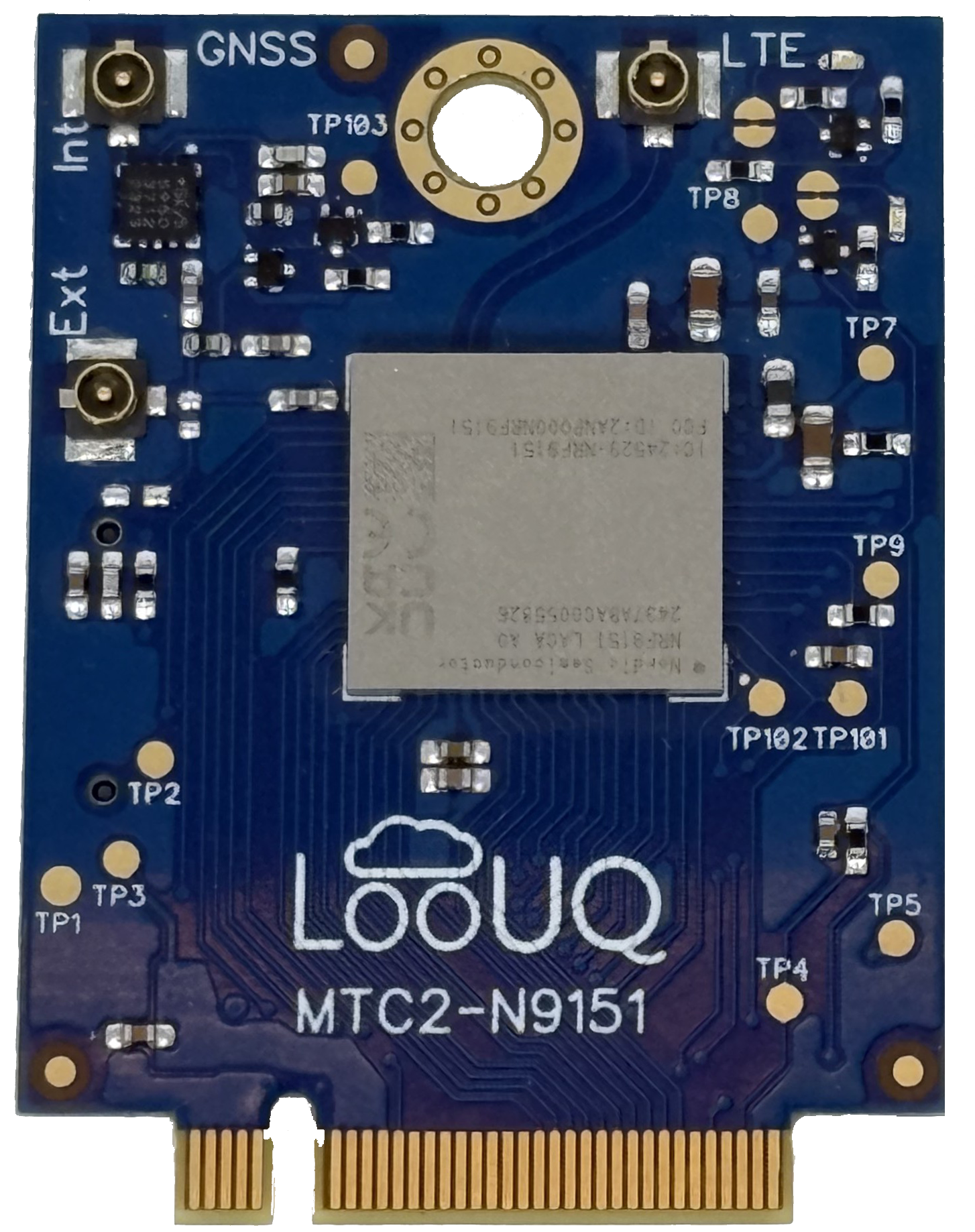
Embedded IoT modem featuring the Nordic Semiconductor nRF9151
The MTC2-N9151

A universal IoT communications device for every use case.
The nRF9151 has an Arm Cortex-M33 as a dedicated application processor, fully programmable by the user, with 1MB of FLASH, 256kB of RAM, and a broad array of peripherals. With the MTC2-N9151 you do not need a separate MCU chip in your design save costs and streamlining your product design. Running at 64MHz, the MTC2-N9151 can handle even the most demanding IoT sense and control applications.
By leveraging the straight forward development features of the Nordic Connect SDK, the MTC2-N9151 is fully integrated into the Nordic style of embedded application development. LooUQ provided templates and overlays get you up and running quickly and on the road to rich Zephyr RTOS applications. Security is rock solid too, the nRF9151 module includes the Arm TrustZone and Arm CryptoCell, these advance security features are seamlessly supported in Nordic Connect SDK and helping you guard against current and future security risks.
Communications is top-shelf with support for LTE-M and NB-IoT across all public provider networks. But you can go infrastructure free with optional DECT-NR+ firmware. DECT-NR+ is a robust 5G specified wireless technology for building private IoT networks. When running standard LTE firmware, a GNSS receiver is also available.
When you are ready to go out of this world, the MTC2-N9151 is ready for non-terrestrial networking (NTN). With Nordic's NTN optimized firmware you can start testing your really remote idea.
GNSS features include an onboard LNA for passive GNSS (GPS) antennas. If the need exists, the N9151 has a power-injection circuit for powering remote active GNSS antennas with an embedded LNA. Both the onboard LNA and power-injection circuits are switched automatically based on GNSS activity to conserve power when not needed.
With all these features you might think that the MTC2-N9151 is a power hungry beast, but just the opposite. Nordic’s insightful design make the nRF9151 one of the least power consuming cellular modules available. LooUQ has also incorporated features to further reduce power consumption, like configurable LED operations and switchable low-power mode in multi-MCU systems.
The MTC2-N9151 is fully compatible with Nordic NCS (Nordic Connect SDK). NCS support the popular Zephyr RTOS for a rich development environment that is specifically designed for embedded applications. With the N9151 1 MB of flash and 256 KB of RAM, the RTOS provides new opportunities for advanced embedded applications. To take advantage of this capability, LooUQ provides board files including devicetree overlays and default configuration files entirely created to Zephyr standards.
MTC2-N9151 Features
LTE (LTE-M and NB-IoT) and GNSS available with base firmware
DECT-NR+ (5G) firmware available for infrastructure free networking
Class 3 or Class 5 LTE operation
30mm (W) by 40mm (H) (30mm x 45mm total board space)
4mm total height (part height 1.4/1.5 mm) 2.48mm PCB clearance
M.2 connector host interface, follows LooUQ MTC.2 specification
32 assignable I/O pins with flexible pin multiplexing
8 I/O pins can be ADC (fixed pin assignment)
4 smart-serial peripherals (SPI, I2C, UART, I2S)
4 PWM channels
Both SWD and trace debugging signals on the host interface
Simple 3-5 volt power source
GPIO interface voltage of 1.8v-3.3v
The MTC2-N9151 is manufactured and assembled in Michigan, USA, using components sourced from trusted partners around the world. LooUQ pursues a resilient, sustainable supply chain, partnering with reliable, responsible suppliers committed to quality and ethical practices.
LooUQ offers smart quantity discounts designed to scale with your business: enjoy lower unit prices starting at a competitively low minimum order quantity (MOQ) so small runs remain profitable while larger purchases unlock steeper savings. Our flexible pricing tiers are tied to clear annual targets, letting you plan procurement with predictable rebates and volume incentives that reward growth. Whether you’re launching new SKUs or committing to seasonal replenishment, LooUQ’s discount structure and low-MOQ policy minimize risk, streamline inventory decisions, and maximize margins as your order volumes increase.
For starters, purchase immediately from our online store. There are several flavors of development boards to help you quickly test your ideas and integrate the MTC2-N9151 into your product plans.
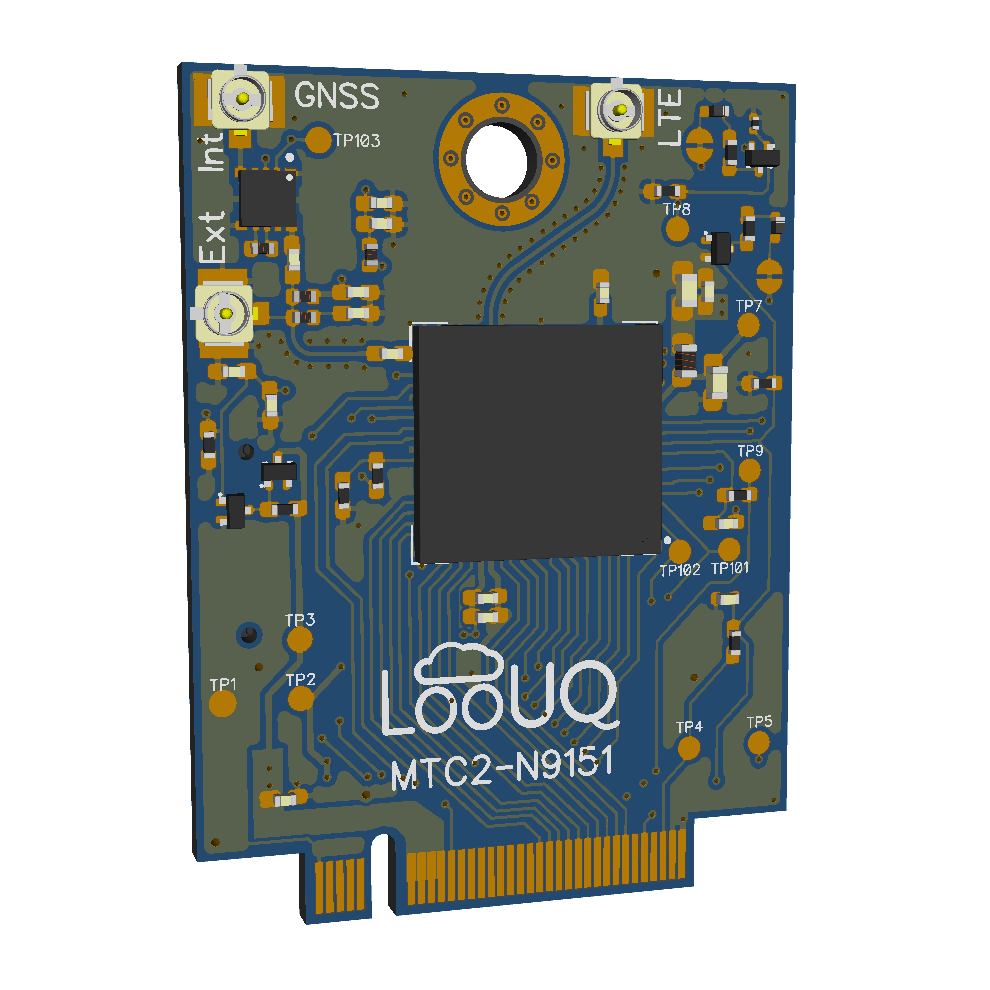
Design Tools
LooUQ provides design resources to simplify integrating the MTC2-N9151 into your design. Like the 3D step model above.
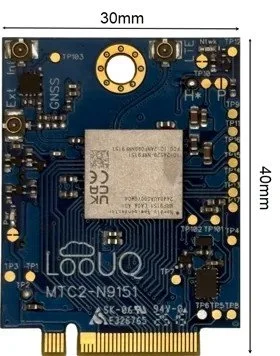
Drop-In Ready
Compact, yet powerful versatile MCU with communications. Easy implementation in your product design with M.2 edge connector and MTC.2 interface specification.
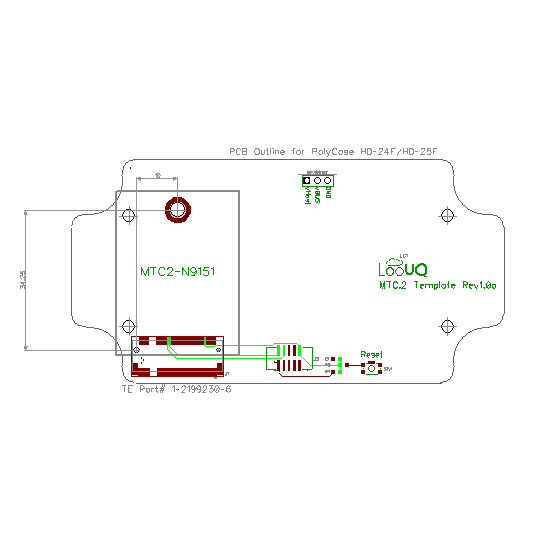
Reference
MTC2-N9151 Getting Started Guide
Introduction to the MTC2-N9151 features and physical layout. Step-by-step assembly and suggestions.
MTC2-N9151 GNSS Quick Start
Regardless of whether your application communicates over TN or NTN, GNSS usually is involved. Here is a quick primer on GNSS and the feature as implemented on the MTC2-N9151.
MTC2-N9151 Non-Terrestrial Quick Start
The MTC2-N9151 is not just for cellular LTE, it goes out of this world... literally with NTN and Skylo (now certified).
Building Applications with the MTC2-N9151
Where you will be soon, now that you have selected the MTC2-N9151. Setting up your toolchain and getting started building IoT application firmware.
MTC.2 Interface Specification
LooUQ’s publicly available, open-sourced interface specification for the M.2 connector. This is the interface used by the MTC2-N9151 and future devices conforming to MTC.2.
Unbox. Connect. Learn.
Ready for Launch?
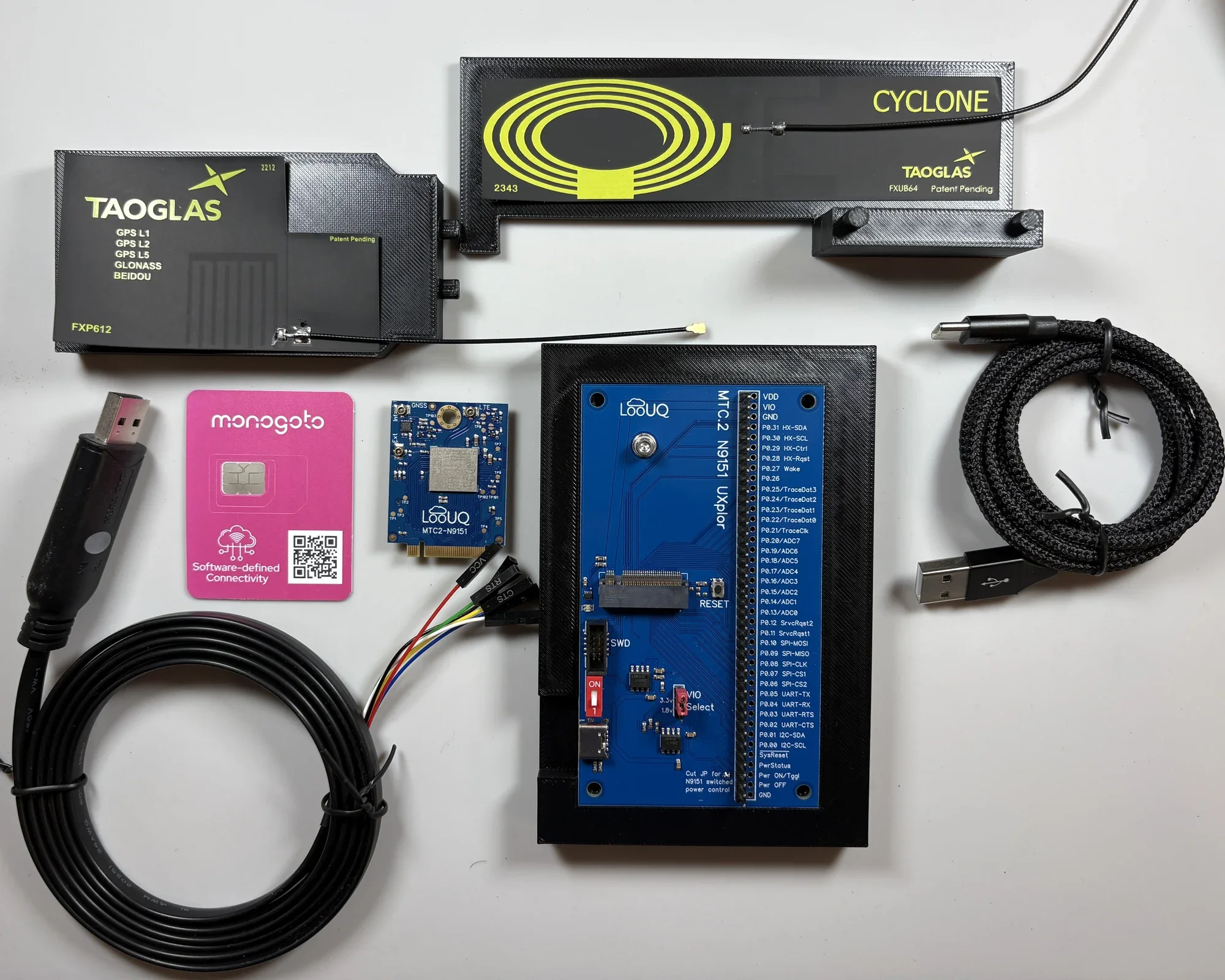
UXplor QuickStart (MTC2-N9151) TN/NTN
Get up and running with the MTC2-N9151 embedded modem in minutes, not days. The UXplor QuickStart bundle brings together everything you need for rapid evaluation and hands-on development, so you can focus on what matters: testing, prototyping, and learning how the MTC2-N9151 performs in your application. Get yours from the LQstore.
What's in the box:
MTC2-N9151 embedded modem
UXplor development board
Antennas (Taoglas FXUB64/FXP612)
Preloaded starter SIM
USB-C power cable
Note: Application development/flashing requires a hardware debug probe (Segger J-Link recommended), sold separately.
Reference Design Templates
LooUQ uses DipTrace for our product development and format for our template libraries, we also provide Eagle files for your use.
LooUQ provides development boards to kickstart product development and to serve as reference designs to make adding the MTC2-N9151 to your design seamless, just copy what you need. Both boards are available on our web store ready to use, or skip to building your own by leveraging our design files.
Both of the development boards below provide full access to the GPIO pins via standard headers, along with a SWD header (2x5, shrouded) for debugging/flashing. There is a RC-filtered reset circuit on both PCBs.
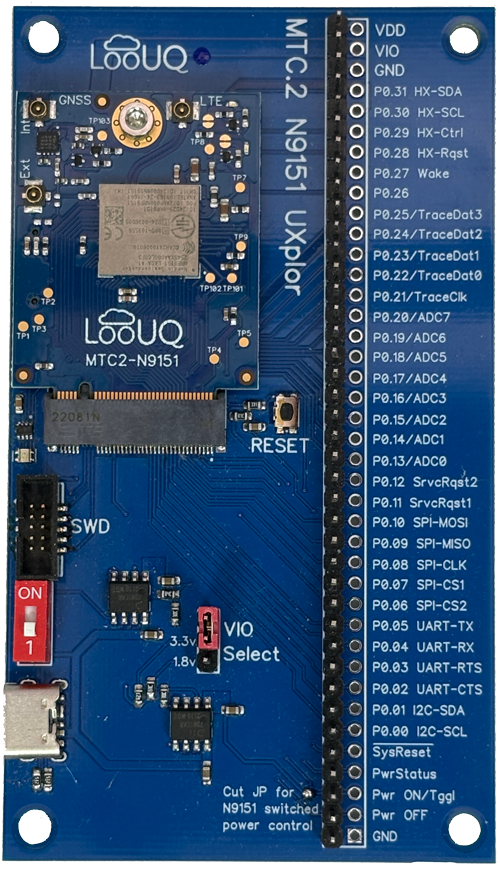
The UXplor board includes two power supplies (3.8v, 1.8v/3.3v jumper selectable, switch controlled) for the MTC2-N9151 sourced from the USB-C connector. The UXplor also includes a RGB LED (TI LP5817 controller) attached via I2C and integrated pull-ups; LooUQ provides a driver for the LED on out GitHub site. The UXplor is geared for software development and sensor prototyping, requiring only antennas to start work on your design.
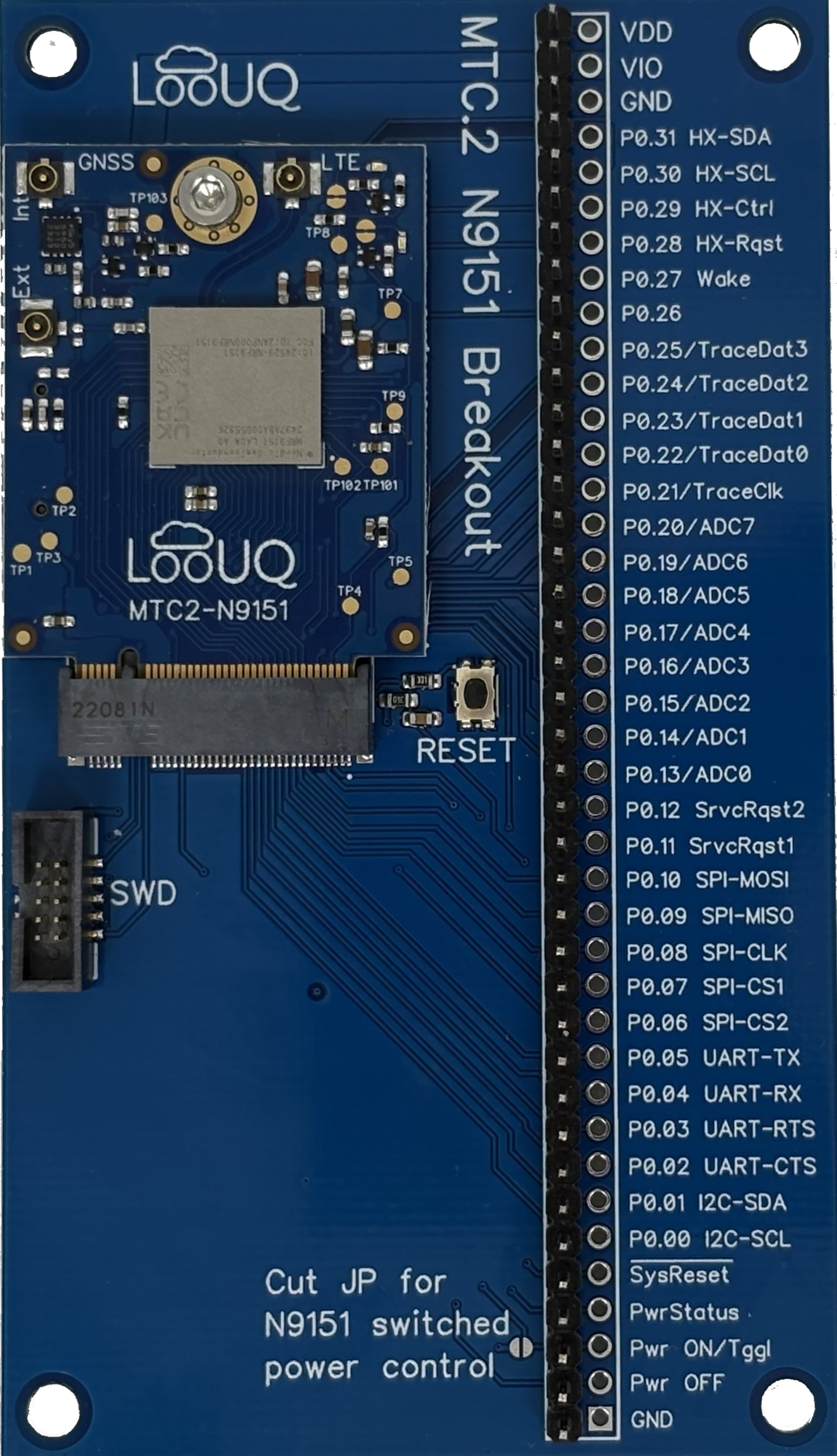
The Breakout board is the same as the UXplor excluding integrated power. It is designed for use with an external bench power supply, enabling precise power/current measurement.